USIsrael military aid End of dependence or a new chapter
US-Israel military aid: End of dependence, or a new chapter?
TEHRAN – On November 3, President Trump said the U.S. would end what he described as approximately $4 billion in annual aid to Israel by the end of the year.
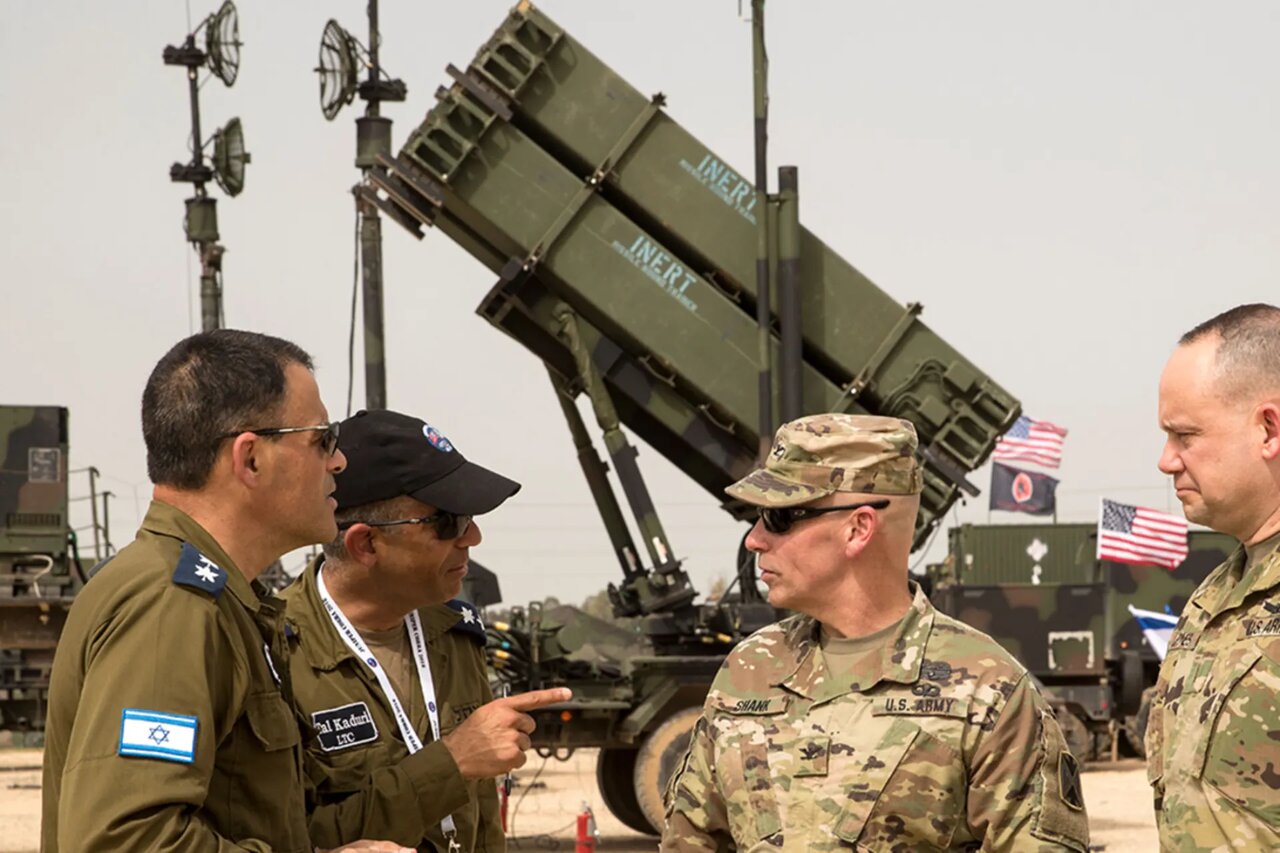
Trump claimed he had reached an understanding with Benjamin Netanyahu on the move, adding that Netanyahu himself had proposed the idea several months earlier. However, the U.S. announcement came as a surprise, both in its timing and the speed with which it was presented.
In January 2026, Netanyahu had expressed his desire to phase out U.S. military aid over ten years, a position he reaffirmed in May.
The existing agreement between the two sides runs until the end of 2028, meaning Trump’s announcement represents a political direction that still requires administrative arrangements on both sides, rather than a fully implemented executive decision. Details concerning which forms of funding are covered by the announcement, and how the termination would be carried out, remain unclear.
Why does Netanyahu want to end U.S. aid?
Netanyahu’s proposal was not made without reason, nor can it be understood simply as an attempt to ease Washington’s financial burden. The genocidal war on Gaza demonstrated to the regime that, however vital the U.S. military umbrella may be, it remains vulnerable to shifts in American public opinion.
Arms shipments and military assistance can become sources of anger among voters who made their position clear in the U.S. midterms. Voters punished Biden at the Presidential election for supporting a genocidal war, and now they have punished Trump by voting against his Republican Party.
Against this rising anti-Israeli sentiment, Netanyahu is seeking to reduce the regime’s security dependence on fluctuations in U.S. domestic politics, particularly as support for the regime has declined among segments of both the Democratic and Republican parties, while opposition to continued funding from American taxpayers has grown.
He recognizes that military aid, long regarded as a central pillar of bipartisan U.S. support for the regime, has become increasingly vulnerable to partisan divisions and electoral pressures.
Yet avoiding political pressure is not the only motivation. Netanyahu wants to redefine the regime’s military relationship with the U.S., moving away from receiving financial grants towards a partnership based on arms purchases, technological cooperation, and joint research and development. The Israelis summarized this approach as a transition “from aid to partnership.”
Netanyahu has also proposed establishing a joint U.S.-Israeli fund to finance the development of new weapons systems, alongside efforts to strengthen the regime’s domestic war industry.
There is also a domestic political benefit. His proposal allows the regime to present itself as a mature economic and military power that no longer needs American grants and can finance a larger share of its own military requirements.
More importantly, this strategy reflects a broader regime ambition to build a more independent military and industrial base, reduce reliance on foreign suppliers for weapons production and development, and give it greater freedom in making military decisions.
That ambition, however, does not mean abandoning U.S. technology or the strategic partnership with Washington.
Financial grants or a strategic relationship?
The current framework for U.S. military aid dates back to a 2016 MOU. It covers fiscal years 2019 through 2028 and is worth a total of $38 billion: $33 billion in foreign military financing, equivalent to $3.3 billion annually, and $5 billion for missile programs, amounting to $500 million per year. Under the agreement, annual assistance totals $3.8 billion, rather than the $4 billion cited in Trump’s remarks.
This funding is not simply transferred into the Israeli treasury. Most of the military financing is earmarked for purchasing U.S. weapons and equipment, reinforcing the regime’s military ties to the U.S. military industry complex while providing U.S. companies with ongoing contracts and commercial interests.
Cooperation on missile systems, research, and development also extends well beyond the value of the annual grant itself.
It is important to distinguish between ending military aid and ending military cooperation. Trump’s own statement referred to the continuation of arms sales, suggesting that the proposed scenario does not involve dismantling military ties.
Rather, it would change the funding arrangement: The regime would pay from its own budget for equipment it previously purchased, at least in part, with U.S. funds, while cooperation in weapons procurement, technology, and joint defense continues.
Another relevant factor is that the current MOU already provides for the gradual elimination of the provision allowing the regime to spend part of its U.S. aid on domestic purchases, known as Offshore Procurement (OSP).
This arrangement is scheduled to end entirely in 2028. In other words, the regime was already moving towards restructuring how it uses U.S. assistance, even before Trump’s latest announcement.
Reshaping the alliance, not ending it
Washington continues to regard the regime as its strategic partner in the region, while Israelis remain dependent on U.S. support in areas such as arms procurement, technology, intelligence, and military coordination.
Continued arms sales and cooperation on defense systems would allow both sides to preserve their shared interests, even if the funding arrangement changes.
Nevertheless, this shift carries political significance that extends beyond its financial value. U.S. military aid has never been simply a contribution to the regime’s war budget. It has also served as an institutional expression of Washington’s commitment to Israeli security and reflected the importance of the relationship within U.S. politics.
When such assistance becomes a subject of partisan and electoral disputes, it reveals that the traditional consensus surrounding it is no longer as firmly established as it once was.
Ending military aid does not mean Washington is abandoning the regime or withdrawing its support for maintaining its military superiority.
Trump reaffirmed that the U.S. would assist Tel Aviv whenever necessary and explicitly stated that arms sales would continue. What is changing, however, is the distribution of financial burdens and the nature of the two sides’ dependence on one another.
The regime is seeking to develop a more independent military and industrial capacity that reduces its need for external funding without relinquishing its strategic partnership with America.
This is where the paradox lies: The regime wants to become more independent in building its military strength without losing the U.S. umbrella that helps sustain its superiority.
Can it strike this balance, or will the limits of its military independence continue to be shaped by two factors: its economic capacity and the scale of the security threats it faces, on the one hand, and the extent of the support Washington is willing and able to provide, on the other?
source: tehrantimes.com