Letter to disillusioned Iranians
Letter to disillusioned Iranians
If you are a Western-based Iranian who believes that American or Israeli bombs would fall on your homeland in order to improve the life there, you are not being optimistic. You are being naïve.
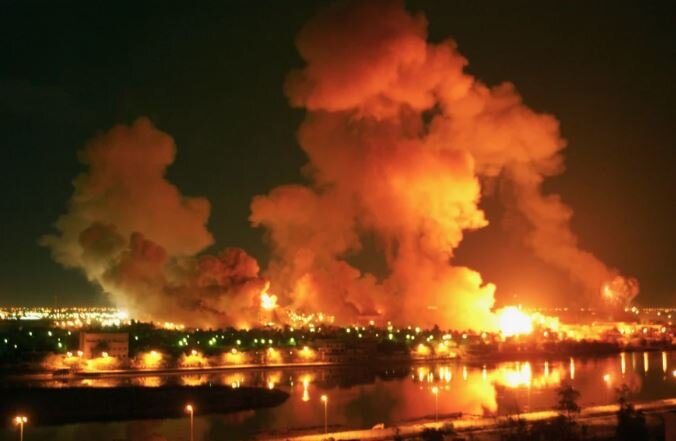
Wars between states are not humanitarian enterprises. They are instruments of power. The central objective of any joint campaign by the United States and Israel against Iran would not be reform. It would not be democracy. It would not be prosperity. It would be disarmament — intended to weaken Iran and make any future invasion less costly.
Yesterday, it was the United States in partnership with the United Kingdom, at the behest of Benjamin Netanyahu, against Iraq. Today, it is the United States and Israel, both led by the same Benjamin Netanyahu, against Iran.
The director of both invasions is the same. His narrative is the same. His playbook is the same. The target region is the same. Only the target countries are different.
The purpose remains unchanged: adding another building block to “Project Greater Israel” by liquidating the last major obstacle.
This war is about capability, not compassion
Iran today possesses the one factor that complicates American and Israeli strategic planning for achieving Greater Israel: military leverage.
Its missile program, drone capabilities, naval asymmetry in the Persian Gulf, and network of regional allies impose real costs. They create deterrence. They force calculations. They limit freedom of invasive action. That deterrent shield — not the improvement of Iranian living conditions — is the real target.
When policymakers speak of “neutralising threats,” they are not discussing social reform. They are discussing missile silos, air defence batteries, command-and-control centres, industrial production lines, and hardened facilities. Remove those, and the strategic equation shifts overnight.
The Iranian people are not the purpose of such a war. They are collateral to it — and ultimately its main victims, facing consequential worsening living conditions. Missiles do not liberate the people who live under their flight path.
In my nearly fifty years of observing global geopolitical behaviour of world powers— and writing about it — I have not seen a single military intervention that improved health services, raised teachers’ salaries, met the needs of government employees, or increased food production and quality. Yet that illusion is repeatedly sold to the public to justify military adventures. Every single time.
Modern interventions follow a familiar script. First comes moral framing: the local government is oppressive; the people deserve better; women’s rights; children’s rights; democracy. External force is presented as the pathway to internal renewal.
We have heard this before.
The tragedy is not that people hope for change. The tragedy is that they confuse external destruction with internal liberation. History does not support that assumption.
When infrastructure is destroyed through military intervention, reconstruction does not automatically follow. What follows first is economic collapse, institutional paralysis, capital flight, and uncertainty. Power vacuums are not filled by idealists, construction engineers, or technocrats. They are filled by whoever can move fastest and fight hardest.
Think Afghanistan, Iraq, Libya, Syria, Somalia, Yemen. If Iran were struck militarily, the initial phase would not be “democratic” blossoming. It would be shock, instability, and strategic vulnerability.
The Iraq lesson few want to remember
There is a recent precedent that should haunt any serious strategic thinker: Iraq.
In 1991, Iraq capitulated after its invasion of Kuwait. It accepted inspections. It dismantled weapons programs. It endured sanctions. Over the next decade, its military capacity was systematically degraded under international supervision, directed by the same power now planning attack on Iran.
By 2003, Iraq’s defensive capabilities had been severely weakened through years of sanctions. The United States and the United Kingdom invaded. Its infrastructure was destroyed. Its coffers were emptied. Its people were thrown into destitution. Its military was disbanded. The nation was consumed by civil war and consequently by ISIS rule.
As Iraq burned from the firestorms of the invasion, George W. Bush stood on an American aircraft carrier declaring, “Mission Accomplished!”. Iranians — and others — should remember that image and reflect about the process that led to it.
Capitulation did not guarantee Iraq’s safety. It lowered the cost of invasion and made Iraq easy prey. This is the lesson that must not be ignored.
If Iran were to surrender its deterrent capacity under pressure — through sweeping restrictions, disarmament terms, or coercive agreements — that would not necessarily end confrontation. It could remove the very barrier that makes large-scale war costly. It would remove deterrence itself. When a state loses its shield, it does not automatically gain security. It often loses bargaining power. And once bargaining power disappears, demands rarely stop.
The myth that compliance ends conflict
Capitulation does not guarantee peace. Some argue: give concessions, and pressure will subside. But strategic competition does not operate on gratitude. It operates on advantage.
If Iran were disarmed in practice — whether through strikes or negotiated dismantlement — what would prevent further demands? Political restructuring? Regional withdrawals? Internal realignments? Why would pressure end at the precise moment leverage disappears?
Power vacuums invite expansion, not restraint. The uncomfortable truth is this: capitulation and disarmament may not close the chapter of conflict. They may simply open a new one.
To those who believe that capitulation prevents war, my answer is clear: the only reliable deterrent for war is being very prepared for war. Iran’s retaliatory capabilities provide exactly that. American and Israeli efforts are intended to remove precisely that deterrent.
source: tehrantimes.com