Destroying south Lebanon with impunity
Destroying south Lebanon with impunity
TEHRAN – There was never any ceasefire in Lebanon, only a Lebanese government that signed one and an occupying army that never stopped bombing.
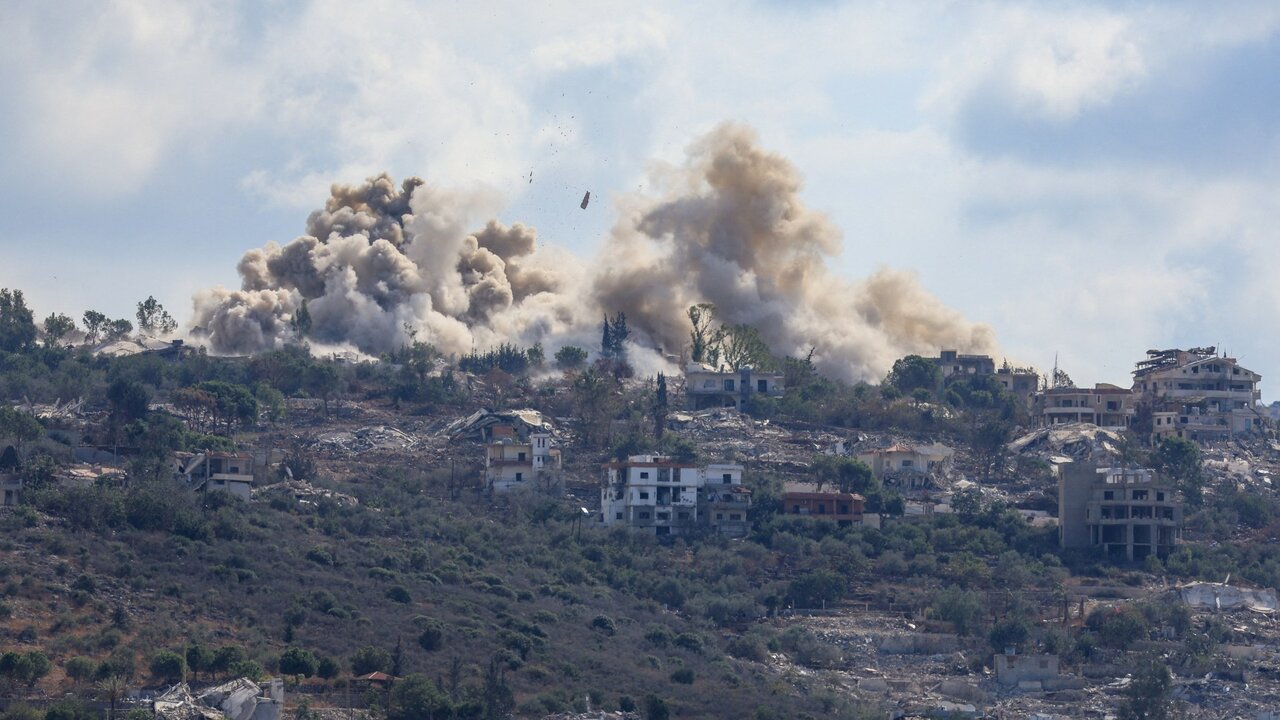
The latest wave was concentrated across southern Lebanon. Airstrikes hit Kfar Tebnit in the Nabatieh district and Al-Qusayr in Marjeyoun. Artillery shelled Ibl al-Saqi, where over ten shells landed near a spring, along with Al-Mansouri, Majdal Zoun, Kounine, Wadi Slouki, Wadi Zebqine, and Meis el-Jabal.
The Israeli Occupation Forces (IOF) carried out an explosive demolition in Bani Hayyan, while bulldozers flattened houses in Zawtar al-Sharqiya and machine-gun fire was directed at Wadi al-Hujair, Wadi al-Slouqi, Beit Yahoun, and Zawtar al-Sharqiya itself.
Drones flew over Beirut’s southern suburbs, a psychological escalation far from any front line. None of these locations is the supposed “pilot zone” that the Lebanese government signed up to in direct talks with Tel Aviv. The IOF is not even pretending to defend settlements in the north; it is punishing entire southern Lebanese communities.
The U.S.-brokered “framework agreement” signed on June 26 designated Zawtar al-Gharbiya, the twin village of Zawtar al-Sharqiya, as a pilot zone for gradual IOF withdrawal.
Residents returned; the Lebanese army deployed. But Zawtar al-Sharqiya, meters away, was explicitly excluded. The IOF remains there, and in the latest wave, it demolished houses and fired machine guns into the adjacent valleys.
The regime’s military itself stated the area is “not part of the pilot area.” Residents describe the dividing line between the two villages as “the Berlin Wall.”
When displaced families returned to zones designated at Froun and Srifa, they found the IOF had never occupied those areas in the first place. The regime was credited with withdrawing from land it never held, while tightening its grip on the territory it occupied.
The pilot zone is not a step toward peace. It is a stage set and allows the regime to claim compliance while continuing to seize, demolish and empty the areas it intends to occupy. One village is made safe for the cameras. The next is bombed for control.
The framework agreement was not imposed on Lebanon from nowhere. Beirut chose to negotiate directly with an occupying regime and signed on to a mechanism whose terms were known in advance: no timetable, no binding Israeli obligation, no reciprocity. In doing so, the Lebanese government lent its own signature to a process that has since been used to legitimize an open-ended occupation.
While Israeli violations are the primary fact, they were made easier by a Lebanese leadership that accepted a deal structured to fail and then watched the south burn while insisting the mechanism was working.
In the so-called pilot zones the small villages of Froun, Srifa and Zawtar al-Gharbiya, the Lebanese army was already present in Froun and Srifa, where there had been no IOF occupation to withdraw.
In Zawtar al-Gharbiya, the Lebanese army moved in after the IOF pulled back from the town center, though IOF troops remain on the outskirts. What the framework has actually produced is more demolished houses.
Lebanon has filed a formal complaint with the UN Security Council documenting thousands of IOF ceasefire violations. Beirut accuses the regime of clear violations of Resolution 1701, which ended the 2006 war and requires IOF withdrawal from Lebanese territory.
No punitive action has followed. The regime operates with the confidence of a party that has learned that documentation without consequence is just paperwork. The pattern is now mechanical: the IOF strikes, Lebanon files, the Security Council adjourns. Impunity is not a failure of the system. It is the system working as designed.
The comparison is no longer rhetorical. Regime officials have invited it themselves: Defense Minister Israel Katz has described the demolition campaign in the south using the “Rafah and Beit Hanoun model in Gaza.” Homes are being systematically destroyed to clear ground the IOF holds by force.
The scale differs; the logic does not. In both occupied regions, destruction is used as a tool of demographic pressure: to make life impossible and a return unthinkable. What is happening in southern Lebanon is not a security operation that got out of hand. It is a slow, methodical erasure conducted with the confidence that no one will stop it.
Since March 2, IOF attacks in Lebanon have killed 4,389 people and injured 12,428, displacing more than one million. In the latest wave, bulldozers in Zawtar al-Sharqiya destroyed homes while families stood and watched. That is the strategy: not a single massacre that would force the world to react, but a daily grind of destruction that the world can learn to ignore.
The June 26 framework agreement is not a neutral ceasefire. The agreement does not contain the word “withdrawal.” It imposes no binding timetable on the occupying regime, grants it “considerable discretion” over any renewed occupation, and places every concrete obligation on Lebanon. Shortly after signing, Netanyahu and his ministers stated publicly that they had no intention of leaving Lebanon. As one analyst put it, the agreement “creates a structure that allows the Israelis to remain in southern Lebanon indefinitely.”
The territorial ambition is not hidden. Katz has said that the IOF will hold Lebanese territory up to the Litani River indefinitely, roughly one-tenth of Lebanon, while Finance Minister Bezalel Smotrich declared that “the Litani must become our new border with the state of Lebanon.”
Beyond the military occupation lies a civilian ambition: a movement called Uri Tzafon, “Awake, North Wind”, campaigns for permanent regime settlements in southern Lebanon. One of its founders described the sequence without euphemism: “The [IOF] goes in, conquers, and clears. And afterwards we must not withdraw, but settle.”
The regime’s campaign in southern Lebanon is not a response to Hezbollah fire. Hezbollah has not been striking. Not at the IOF in southern Lebanon or at the regime. It is not a defensive necessity. The Lebanese land being razed to the ground runs to the Litani. It is not a temporary measure. Israeli ministers describing it say so themselves.
What exists instead is a one-sided war against a captive population, conducted under the cover of an agreement Beirut should never have signed and Washington intentionally enforced. The “pilot zone” is a fig leaf. The UN complaints are filed and forgotten. The threats to seize Tyre, Sidon, and Nabatieh and blockade Beirut and Tripoli are not contingencies; they are announcements.
source: tehrantimes.com